
Dowbloadable version of the programme is available here.
From emergency to a long-term approach: How can inclusive cities shape resilient futures?
Migration and population change have long enriched cities, bringing new perspectives, skills and opportunities for innovation and growth. Yet responses are still too often shaped by emergency thinking. This panel explores how cities can move from short term response to long-term strategy and what this means in practice – from leadership and partnerships to meaningful participation – to build inclusive, resilient and thriving communities.

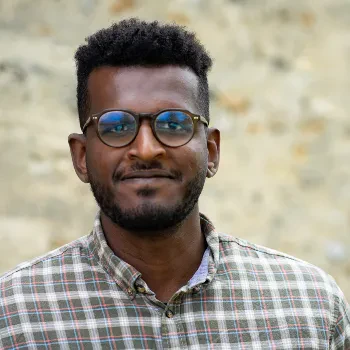
This exhibition brings together the photovoice of migrant women, sharing their experiences, perspectives and everyday realities across the EU. Through visual storytelling, the exhibition shifts the perspective from migrant women as mere objects of viewers’ attention to subjects who challenge cultural and stereotypes and whose voices are integral to EU democracy.
Parallel workshops: Exploring the foundations of resilient inclusive cities
The series of workshops explores how cities can strengthen their resilience as communities and populations change, polarisation rises, and European policy frameworks evolve. They look at how cities can recognise the capacities and contributions already present in diverse communities, build strong partnerships, and develop services and spaces that enable people to participate, contribute and belong. From this perspective, urban resilience is also closely linked to the well-being and resilience of the people and communities who live in cities.
Participants must choose one workshop to attend in Round 1 and one in Round 2.
Using Little Amal as a starting point, this workshop explores how cities use art and public space to shape narratives around migration and belonging. Little Amal, a 3.5-metre puppet of a 10-year-old Syrian refugee girl, has travelled across Europe since 2021, bringing displaced children’s stories into public spaces and sparking conversations on inclusion. Alongside her story, a city that welcomed Amal will share how local authorities can use culture to support long-term integration beyond one-off moments.
Civil society organisations are key partners in migrant inclusion, yet they are often treated only as service providers. This workshop looks at how cities can share decision-making power with civil society and migrant-led organisations, and why such co-governance matters for democratic resilience amid rising polarisation. Speakers from cities and civil society will share practical models, lessons learned and the tensions of real partnership.
The workshop will focus on the contribution of migrant mothers to integration and community life, recognising them as active connectors and contributors, not only as recipients of support. It will explore how cities can build on the capacities, knowledge and networks mothers already bring, working with schools, childcare providers, women’s organisations, shelters and other local actors to create the spaces and opportunities that enable them to participate and belong.
Moderator: Egle Puidokaite, Communication officer, Veda Vidus
Parallel workshop - Round 2
As the EU Pact on Migration and Asylum is implemented, it will have profound local consequences on public administration and communities in cities. How can cities respond to changing realities on the ground, including the risk of increasing precariousness, while ensuring access to essential services? And how can cities have a stronger voice in shaping the policies they are expected to implement?
What do employers need to recruit and retain refugees and migrants — and how can cities, employers and other partners make it easier for them to do so? Resilient cities need employers that are able and willing to draw on the skills and potential of a diverse workforce as populations and labour markets change.
Access to healthcare is a clear test of urban resilience, exposing the gap between emergency response and lasting structure. Cities have built rapid responses to acute needs, but healthcare access remains a chronic governance challenge for newly arrived migrants and refugees, and for people with precarious or undocumented status. This workshop brings together a city and a specialised public health institution to explore what it takes to make that shift.
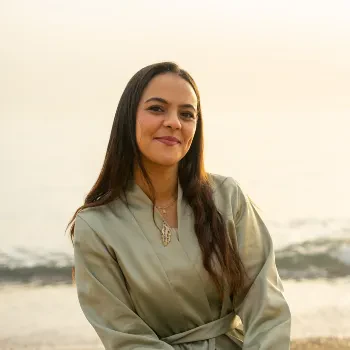
The Story cities tell: Building trust, cohesion and resilience through migration narratives
Cities do not only respond to migration through policies and providing services. They also shape how migration is understood, discussed and experienced in the public sphere, influencing social cohesion. This panel will explore what role narratives and storytelling can play in building trust, and fostering belonging and how cities can navigate fear, misinformation and polarisation. Bringing together research, city experience and community perspectives, panellists will debate how cities can support more constructive and inclusive public conversations about migration.
Study visits
Participants will visit International House Vilnius (IHV), a one-stop centre helping international newcomers settle in and integrate into the city. The visit will present IHV’s services for internationals and employers, including legal and administrative consultations, pre-arrival and relocation support, and community events. Participants will also observe a mock exit interview, showing how IHV learns why international talent leaves the city and uses these insights to improve its services
A bus will be provided for this visit
Artscape is a Lithuanian arts agency that creates cultural programmes focused on community integration. It coordinates Refugee Week in Lithuania and works with migrant and refugee communities, using art to bring newcomers and local residents together through shared creative experiences, self-expression and dialogue. In this hands-on workshop, participants will make their own cyanotype postcards and write a message of care to someone close to them.
This is a walking tour, and it will take approximately 15 minutes on foot to reach Artscape.
SPEAK connects migrants, expats and locals through community-led language groups and cultural events, tackling isolation as the main barrier to integration. Participants will learn how the model works, how groups and events are run with the help of technology, and what impact they have. The visit includes a live Lithuanian language session.
A bus will be provided for this visit.
Nepatogaus kino klasė is an educational platform that uses documentary films to open dialogue on complex social and human rights issues. It pairs selected films with ready-to-use methodological materials, helping educators, organisations and communities turn a screening into a structured, inclusive conversation. In this session, participants will watch a short documentary on migration and join a facilitated discussion to experience the method first-hand.
This is a walking tour, and it will take approximately 15 minutes on foot to reach the venue.